Why Ethical Hacking Is One of the Most In-Demand Careers in 2026
The modern world runs on technology. From banking and healthcare to transportation and communication, almost every industry now depends on digital systems. While this digital transformation brings enormous benefits, it also creates opportunities for cybercriminals to exploit vulnerabilities.
Cyberattacks have become more frequent and more sophisticated over the past few years. Organizations worldwide are investing heavily in cybersecurity to protect their data, systems, and customers. Because of this growing threat, the demand for ethical hackers has increased dramatically.
According to global cybersecurity workforce studies, millions of cybersecurity positions remain unfilled due to the shortage of skilled professionals. Ethical hackers play a critical role in closing this gap by helping organizations identify weaknesses before malicious attackers exploit them.
If you are interested in technology, problem-solving, and digital security, starting a career in ethical hacking in 2026 can be one of the smartest and most rewarding career decisions you make.
This guide will explain everything you need to know from essential skills and tools to certifications and a clear roadmap for getting started.
What Is Ethical Hacking?
Ethical hacking, also known as penetration testing or white-hat hacking, is the authorized practice of testing computer systems, networks, and applications to discover security vulnerabilities.
Unlike cybercriminals, ethical hackers work legally and with permission from organizations. Their goal is to simulate real-world cyberattacks in a controlled environment to uncover weaknesses before malicious hackers can exploit them.
Once vulnerabilities are discovered, ethical hackers report them to the organization along with recommendations for improving security.
Ethical hackers play a vital role in protecting digital infrastructure. They help organizations strengthen defenses against cyber threats such as data breaches, ransomware attacks, and unauthorized access.
Types of Ethical Hackers
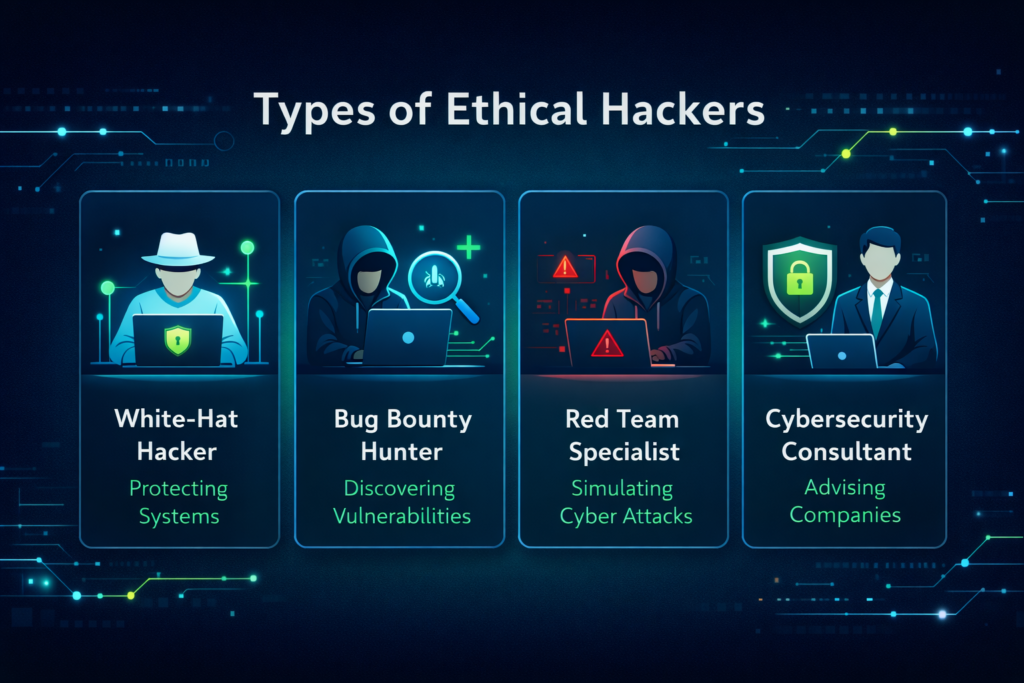
There are several roles within ethical hacking, including:
White-Hat Hackers
Security professionals hired by companies to test systems and improve security.
Bug Bounty Hunters
Independent researchers who discover vulnerabilities and receive rewards from companies.
Red Team Specialists
Experts who simulate advanced cyberattacks to test an organization’s ability to detect and respond to threats.
Cybersecurity Consultants
Professionals who advise organizations on improving security strategies and infrastructure.
Each of these roles contributes to building a stronger cybersecurity ecosystem.
Why Ethical Hacking Careers Are Growing in 2026
Ethical hacking has become one of the fastest-growing career fields in the technology industry. Several major trends are driving this demand.
1. Increase in Cyberattacks
Cyberattacks such as ransomware, phishing, and data breaches have become more frequent. Organizations must constantly test their systems to stay protected.
2. Rapid Digital Transformation
Businesses are moving their operations to cloud platforms, mobile applications, and connected devices. While this improves efficiency, it also increases the number of potential vulnerabilities.
3. Global Cybersecurity Skills Shortage
The cybersecurity industry faces a global talent shortage. Companies are actively searching for skilled professionals who can help secure digital systems.
4. Regulatory and Compliance Requirements
Many industries are required to conduct regular security assessments to comply with regulations such as GDPR, PCI-DSS, and HIPAA. Ethical hackers help organizations meet these requirements.
5. Rise of AI-Powered Cyber Threats
Cybercriminals are increasingly using artificial intelligence to automate attacks. Ethical hackers must stay ahead by understanding modern attack techniques and defense strategies.
Because of these factors, ethical hacking offers strong job security and career growth opportunities.
Essential Skills Needed to Become an Ethical Hacker
To start an ethical hacking career, beginners should focus on developing both technical and analytical skills.
Networking Fundamentals
Understanding networking concepts is essential. Ethical hackers must know how data travels across networks and how attackers exploit communication systems.
Important networking topics include:
- TCP/IP protocols
- DNS and HTTP/HTTPS
- Firewalls and network security
- Packet analysis
Linux and Operating Systems
Many cybersecurity tools run on Linux systems. Learning Linux commands, system administration, and file permissions is extremely important.
Programming Knowledge
Basic programming skills help ethical hackers automate tasks and analyze vulnerabilities.
Common programming languages include:
- Python
- JavaScript
- Bash scripting
Web Security Knowledge
Many attacks target web applications. Ethical hackers should understand common vulnerabilities such as:
- SQL Injection
- Cross-Site Scripting (XSS)
- Broken Authentication
- Cross-Site Request Forgery (CSRF)
Problem-Solving and Analytical Thinking
Ethical hackers must think creatively and analyze systems carefully to identify hidden vulnerabilities.
Essential Tools Ethical Hackers Use
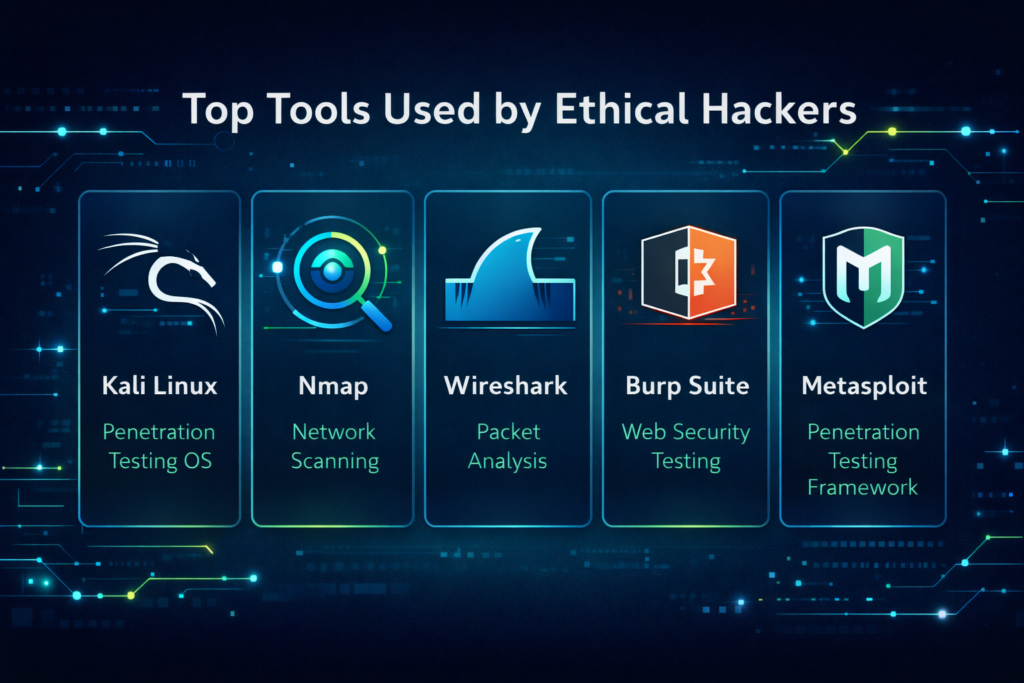
Ethical hackers rely on specialized cybersecurity tools to test systems and discover vulnerabilities.
Kali Linux
Kali Linux is a penetration testing operating system that includes hundreds of security tools used by professionals worldwide.
Nmap
Nmap is a powerful network scanning tool used to identify hosts, open ports, and services running on a network.
Wireshark
Wireshark is a network analysis tool that captures and inspects data packets to understand network activity.
Burp Suite
Burp Suite is widely used for web application security testing. It helps ethical hackers analyze web traffic and identify vulnerabilities.
Metasploit Framework
Metasploit is an advanced penetration testing framework used to test vulnerabilities in controlled environments.
Practicing with these tools is essential for developing real-world cybersecurity skills.
Certifications That Help Start an Ethical Hacking Career
Certifications help demonstrate credibility and knowledge to potential employers.
Some of the most recognized ethical hacking certifications include:
CompTIA Security+
A beginner-friendly certification that covers fundamental cybersecurity concepts.
Certified Ethical Hacker (CEH)
One of the most recognized certifications for ethical hacking professionals.
Offensive Security Certified Professional (OSCP)
A highly respected hands-on certification focused on penetration testing skills.
CompTIA PenTest+
Focuses on vulnerability testing, penetration testing, and reporting techniques.
eJPT (Junior Penetration Tester)
A practical beginner certification designed for aspiring ethical hackers.
While certifications are helpful, hands-on experience is equally important.
Step-by-Step Roadmap to Become an Ethical Hacker
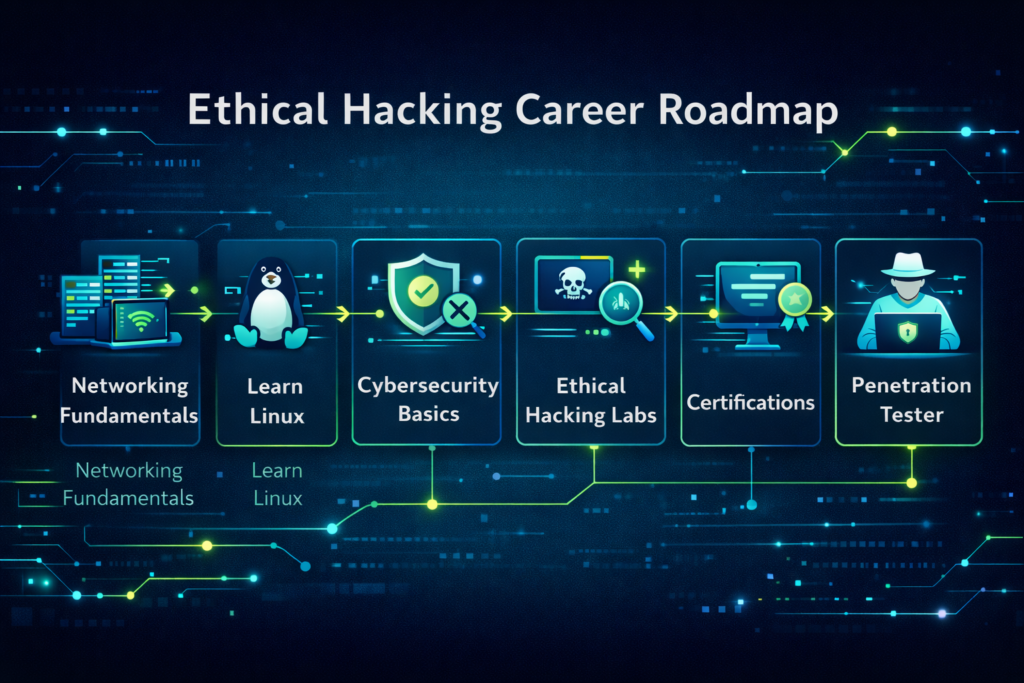
Starting an ethical hacking career may seem challenging, but following a structured learning path makes it manageable.
Step 1: Learn Networking Basics
Begin with networking fundamentals to understand how systems communicate.
Step 2: Learn Linux and Command-Line Skills
Linux is essential for using many cybersecurity tools.
Step 3: Study Cybersecurity Fundamentals
Learn about threats, vulnerabilities, and security principles.
Step 4: Practice in Ethical Hacking Labs
Use platforms like TryHackMe and Hack The Box to practice hacking techniques safely.
Step 5: Earn Entry-Level Certifications
Certifications help validate your knowledge and improve your job prospects.
Step 6: Build a Practical Portfolio
Document your lab exercises, security research, and vulnerability discoveries.
Employers value real-world practice more than theoretical knowledge.
Career Opportunities in Ethical Hacking
Once you gain the necessary skills, several career paths become available in cybersecurity.
Common roles include:
- Penetration Tester – Tests systems to find vulnerabilities
- Security Analyst – Monitors and investigates security incidents
- SOC Analyst – Detects threats in real time within security operations centers
- Bug Bounty Researcher – Finds vulnerabilities for rewards
- Cybersecurity Consultant – Advises organizations on security strategies
As professionals gain experience, they can advance into roles such as Red Team Specialist or Security Architect.
Ethical hacking careers offer strong salaries, remote work opportunities, and continuous learning.
Conclusion: Your Ethical Hacking Journey Starts Today
Starting a career in ethical hacking requires dedication, curiosity, and consistent practice. By learning networking fundamentals, mastering cybersecurity tools, earning certifications, and gaining hands-on experience, anyone with the right mindset can succeed in this field.
The demand for ethical hackers will continue to grow as technology advances. If you are passionate about cybersecurity and problem-solving, now is the perfect time to begin your journey into ethical hacking.
