Artificial intelligence has transformed nearly every aspect of modern life, from healthcare to entertainment. However, the same technology that powers smart assistants and recommendation algorithms is also being weaponized against ordinary people. Deepfake attacks represent one of the fastest-growing cybersecurity threats of this decade, using machine learning to fabricate convincing audio, video, and images that are nearly indistinguishable from reality. For students navigating the digital world, understanding this threat is no longer optional. It is a critical component of online safety and data privacy in an era where synthetic media can be created and distributed within minutes.
What Are Deepfake Attacks
Deepfake attacks involve the use of generative adversarial networks and deep learning algorithms to produce manipulated media content that falsely represents real individuals.
- Facial manipulation technology maps one person’s likeness onto another in video or images with high realism.
- Voice cloning tools can replicate a person’s speech patterns using only a few seconds of recorded audio.
- These attacks exploit the human tendency to trust visual and auditory information.
- Synthetic media created this way is used for identity fraud, social engineering, and spreading misinformation.
How Generative Adversarial Networks Power This Threat
Generative adversarial networks, commonly known as GANs, are the core machine learning architecture behind most deepfake content.
- A GAN consists of two neural networks: one generates fake content while the other evaluates its authenticity.
- Through repeated cycles, the generator improves until its output becomes highly convincing.
- Open-source GAN frameworks have lowered the technical barrier, making this capability accessible to non-experts.
- Cloud computing resources allow large-scale synthetic media production without expensive hardware.
Common Types of Deepfake Attacks Targeting Young Adults
Cybercriminals deploy multiple attack categories that specifically affect the 18 to 24 age group due to their high social media activity and digital footprint.
- Non-consensual intimate imagery uses facial manipulation to place someone’s likeness into explicit content without permission.
- Impersonation scams involve cloned voices or video to deceive friends, family, or financial institutions.
- Academic fraud includes fabricated video evidence submitted in disputes or disciplinary proceedings.
- Social engineering campaigns use synthetic profiles to build trust before extracting sensitive personal data.
Cybersecurity Risks Linked to Deepfake Attacks
The cybersecurity implications extend beyond personal harm and reach into institutional and national security.
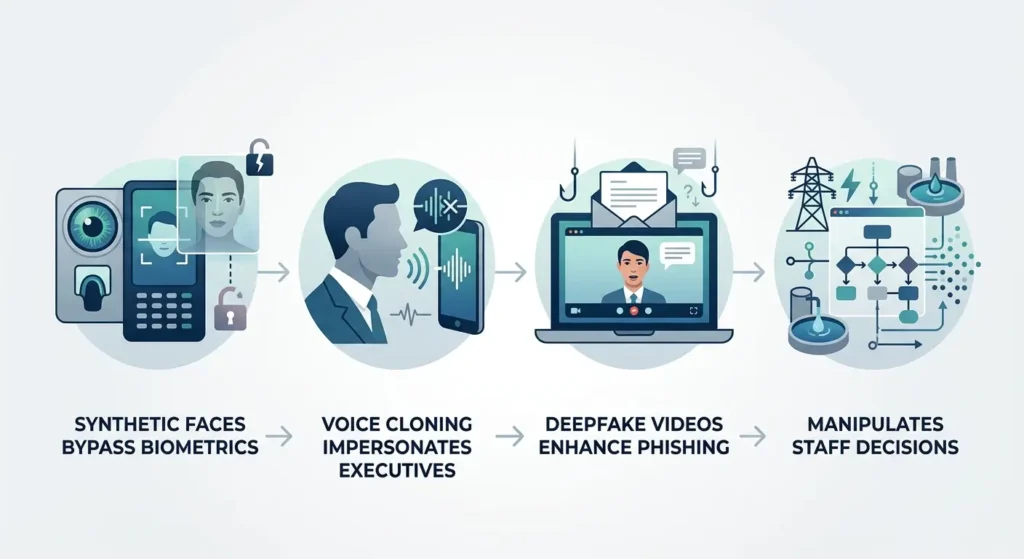
- Biometric authentication systems used in banking and border control can be bypassed using high-quality synthetic faces.
- Corporate networks face risks when voice cloning is used to impersonate executives during internal communications.
- Phishing campaigns enhanced with deepfake video are significantly more persuasive than traditional text-based attempts.
- Critical infrastructure organizations have reported incidents where synthetic media was used to manipulate staff decisions.
The Role of Misinformation and Social Engineering
Deepfake attacks are a primary tool for spreading misinformation and executing large-scale social engineering operations.
- Fabricated videos of public figures making false statements can shift public opinion rapidly across social platforms.
- Social engineering attacks exploit emotional reactions triggered by realistic but entirely false media content.
- These campaigns target institutional trust, including universities, government bodies, and media organizations.
- Students are particularly vulnerable because they frequently consume and share digital content without verification.
How Digital Forensics Detects Synthetic Media
Digital forensics has evolved alongside deepfake technology to identify signs of manipulation in suspicious content.
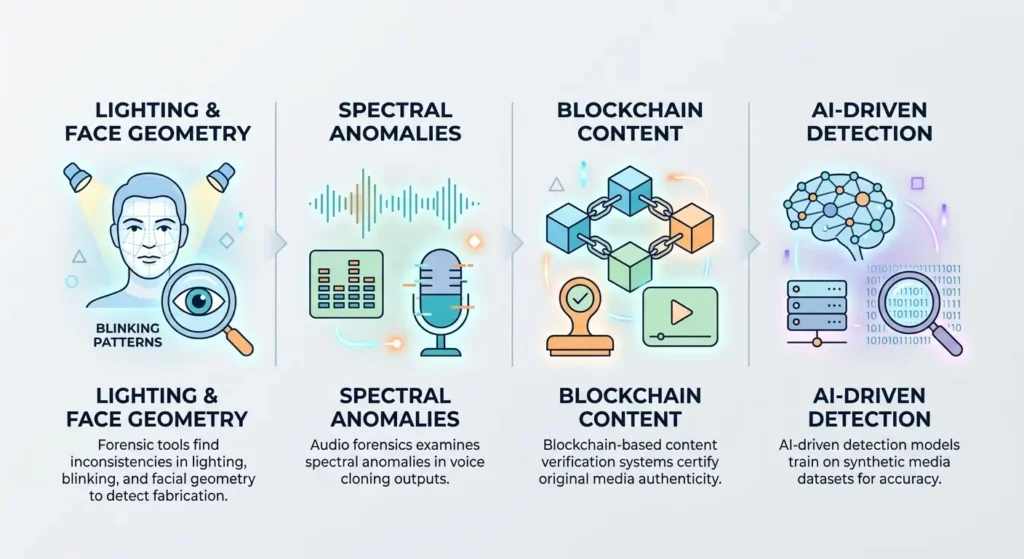
- Forensic tools analyze inconsistencies in lighting, blinking patterns, and facial geometry to detect fabrication.
- Audio forensics examines spectral anomalies in voice cloning outputs that differ from natural human speech.
- Blockchain-based content verification systems are being developed to certify the authenticity of original media.
- AI-driven detection models are trained on large datasets of known synthetic media to improve identification accuracy.
Who Is Most at Risk from Deepfake Attacks
Understanding who faces the greatest exposure helps in targeting awareness and preventive efforts more effectively.
- Students and young adults with extensive public social media profiles provide the data needed to construct convincing fakes.
- Public figures, activists, and journalists face targeted campaigns designed to damage credibility or silence voices.
- Small businesses lacking dedicated cybersecurity infrastructure are vulnerable to voice and video impersonation fraud.
- Anyone who has participated in video calls, posted photos online, or recorded audio content carries some level of exposure.
Protecting Yourself Against Deepfake Threats
Practical defensive strategies can significantly reduce individual vulnerability to deepfake-related cyber threats.
- Limit the volume of publicly accessible personal media by reviewing privacy settings across all social platforms.
- Verify unexpected requests involving financial transactions or sensitive information through a secondary communication channel.
- Use platforms that support end-to-end encryption and offer content authenticity verification features.
- Stay informed about emerging detection tools and follow guidance from cybersecurity authorities such as national computer emergency response teams.
Policy, Legislation, and Platform Responsibility
Addressing deepfake attacks requires coordinated responses from governments, technology companies, and educational institutions.
- Several countries have enacted legislation criminalizing non-consensual deepfake content and identity fraud using synthetic media.
- Social media platforms are investing in automated detection pipelines to flag and remove manipulated content at scale.
- Universities are beginning to incorporate digital literacy and cyber threat awareness into mainstream curricula.
- International cooperation through organizations like Interpol and the UN Cybercrime Treaty framework is expanding to address AI-driven crimes.
Conclusion
Deepfake attacks represent a serious and evolving threat that sits at the intersection of artificial intelligence, data privacy, and cybersecurity. As synthetic media tools become more accessible, the potential for misuse grows proportionally. Students aged 18 to 24 are both frequent targets and unwitting amplifiers of this threat through their digital habits. Building awareness, practicing responsible media consumption, and supporting strong policy frameworks are the most effective responses available today. Digital forensics and detection technologies are advancing, but individual vigilance remains the first and most important line of defense. Understanding the mechanics and consequences of these attacks is the foundation of meaningful online safety in the current decade.
Frequently Asked Questions
What exactly are deepfake attacks and how do they work?
Deepfake attacks use machine learning models, specifically generative adversarial networks, to create synthetic audio or video content that realistically depicts real people saying or doing things they never actually did. The technology analyzes large volumes of existing media to learn patterns and then generates new content that mirrors those patterns convincingly.
Can deepfake attacks affect someone who is not a public figure?
Yes. Anyone with a publicly accessible photo or audio recording online can become a target. Identity fraud, impersonation scams, and non-consensual synthetic imagery are commonly directed at private individuals, particularly those with active social media profiles.
How can students verify whether a video or audio clip is genuine?
Students can use publicly available deepfake detection tools, cross-reference content across multiple credible sources, and look for inconsistencies in facial movement, lighting, or audio quality. Reverse image searches and digital forensics platforms offer additional verification support.
What should someone do if they are a victim of a deepfake attack?
The immediate steps include documenting the content with screenshots, reporting it to the platform where it appears, contacting local law enforcement or a cybercrime reporting authority, and seeking legal advice if identity fraud or reputational damage has occurred. Many jurisdictions now have specific legal provisions covering synthetic media abuse.
