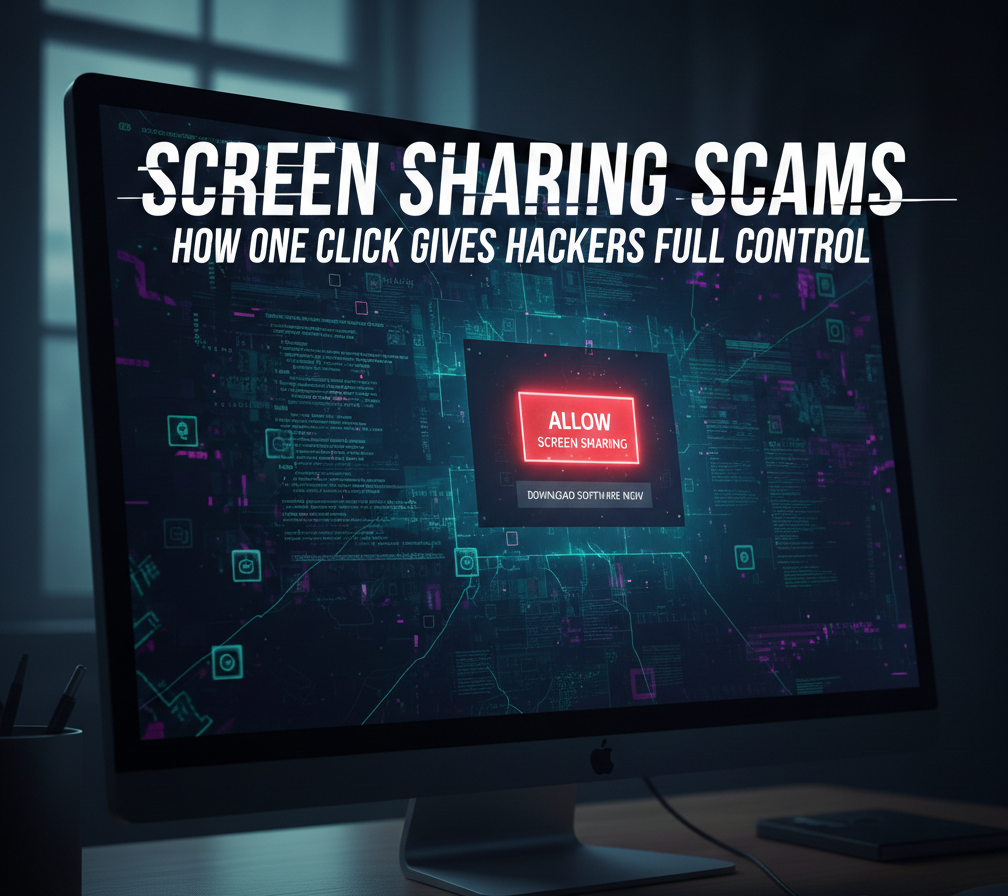
In 2026, digital fraud is no longer limited to suspicious emails or fake phone calls. Today, one simple action can expose everything your files, your passwords, your bank details, even your identity. That action is screen sharing.
What makes this threat so dangerous is how normal it feels. Sharing your screen has become part of daily life. We use it for meetings, remote work, online classes, and technical support. But criminals have found a way to turn this helpful feature into a powerful weapon.
Screen Sharing Scams are now one of the fastest-growing cyber threats worldwide. They don’t rely on breaking into your system. Instead, they trick you into opening the door yourself.
Artificial intelligence and social engineering have combined to create highly convincing scenarios. Hackers no longer need complex malware when they can simply persuade you to click “Share Screen.”
That single click can give them full visibility and sometimes full control.
What Are Screen Sharing Scams?
Screen Sharing Scams are a type of fraud where criminals trick victims into sharing their device screen through video conferencing or remote access tools. Once access is granted, scammers can view sensitive information in real time and guide victims into transferring money or revealing private data.
Unlike traditional hacking, this method feels interactive and trustworthy. The scammer often pretends to be
- A bank representative
- A tech support agent
- A government official
- A company IT specialist
Because the interaction happens live, victims feel they are in a legitimate conversation. That illusion of trust is what makes Screen Sharing Scams extremely effective.
The Changing Face of Online Fraud
Years ago, scams were easier to detect. Strange email addresses, poor grammar, and suspicious links were clear warning signs.
But criminals evolved.
First came professional phishing emails.
Then fake customer support numbers.
Then remote access fraud.
Now, Screen Sharing Scams have taken manipulation to a new level.
Scammers use modern tools like
- Remote desktop applications
- Video conferencing platforms
- AI-generated voice assistants
- Caller ID spoofing
These tools are widely available and easy to use. Technology that was designed to improve collaboration is now being misused to exploit trust.
How Screen Sharing Scams Work
The process usually begins with urgency.
You might receive a phone call claiming:
- There is suspicious activity in your bank account
- Your computer has a virus
- Your tax records are under investigation
- A refund needs to be processed immediately
The scammer sounds calm, professional, and knowledgeable. Sometimes they already know your name or partial personal details, making the call feel legitimate.
Then comes the key step.
They ask you to download or open a screen sharing tool and click “Share.”
At that moment, Remote Access Scams move from conversation to control.
Once your screen is visible, scammers can:
- Watch you enter passwords
- Direct you to fake banking pages
- Ask you to approve transfers
- Install hidden software
- Capture personal documents
Because you are physically performing the actions, banks often treat the transaction as authorized. That is what makes Screen Sharing Scams financially devastating.
When One Click Becomes Total Control
Screen sharing feels harmless. After all, you can see what’s happening. But what many people don’t realize is that scammers are trained to guide your behavior step by step.
They might say:
“Click here.”
“Scroll down.”
“Type your password.”
“Don’t worry, this is secure.”
Under pressure, people comply.
Some advanced Remote Access Scams even request remote control permissions. This allows scammers to move your cursor, open files, and change settings directly.
In just minutes, they can:
- Transfer funds
- Change account credentials
- Lock you out of important services
- Access saved passwords
And because the victim willingly enabled access, the damage can happen very quickly.
Why Screen Sharing Scams Are So Effective
Technology plays a role, but psychology plays a bigger one.
Screen Sharing Scams succeed because they exploit three powerful human triggers:
Urgency – “Act now or your account will be frozen.”
Authority – “I’m calling from your bank’s security department.”
Fear – “Your identity has been compromised.”
When people feel pressured, they stop analyzing and start reacting.
Live interaction makes it even more convincing. Unlike email scams, these fraudsters answer questions instantly. They reassure you. They sound helpful.
The conversation feels real. That’s why victims often realize the truth only after the money is gone.
The Role of AI in Modern Screen Sharing Scams
Artificial intelligence has made Live Screen Fraud
even more sophisticated.
AI tools can:
- Generate realistic customer service voices
- Translate languages instantly
- Provide scripted responses in real time
- Analyze victim reactions and adjust tone
Some scammers use AI-powered chat systems to assist them during calls. This allows them to respond quickly and confidently, increasing trust.
In 2026, fraud is no longer random. It is structured, strategic, and increasingly automated.
Real-World Scenario
Imagine receiving a call from someone claiming to be from your bank’s fraud department.
They correctly state your name.
They mention a recent transaction.
They say your account may be compromised.
To “secure” your funds, they ask you to join a support session and share your screen.
Everything looks legitimate. The website appears real. The representative sounds professional.
You follow instructions.
Within minutes, funds are transferred not to safety, but to the scammer.
This is how Screen Sharing Scams unfold in everyday situations.
Warning Signs to Watch For
Although Remote Access Scams are convincing, there are red flags:
- Unsolicited calls asking you to share your screen
- Requests to act immediately without verification
- Instructions to keep the call confidential
- Pressure to move money to “secure” accounts
- Requests to disable security software
Legitimate banks and government agencies rarely ask customers to share screens unexpectedly.
If someone insists, that is your signal to pause.
How to Protect Yourself
Protection begins with awareness.
To reduce the risk of Screen Sharing Scams, follow these steps:
Never share your screen with unknown callers.
If support is needed, contact the company directly using official numbers.
Do not trust caller ID alone.
Scammers can fake it.
Pause before acting.
Urgency is a manipulation tactic.
Use multi-factor authentication.
Even if passwords are exposed, extra security layers help.
Educate family members.
Elderly individuals are common targets of Remote Access Scams A simple rule can prevent most attacks:
If someone calls you and asks for screen access, hang up and verify independently.
The Growing Threat Ahead
As remote work continues to expand globally, digital collaboration tools will remain essential. Unfortunately, that also means Screen Sharing Scams will continue evolving.
Criminals adapt quickly. They refine scripts. They use better technology. They target both individuals and businesses.
But awareness grows too.
The more people understand how Remote Access Scams operate, the less power scammers have.
Conclusion
Technology itself is not the enemy. Screen sharing is a useful feature that helps millions of people work and communicate every day.
The danger begins when trust is manipulated.
In 2026, the biggest threat is not malware or complex hacking it is persuasion.
Remote Access Scams prove that sometimes the most dangerous attack is the one we willingly allow.
One click can open the door.
One moment of pressure can cause financial loss.
But one pause one decision to verify can stop a scam completely.
Stay alert. Stay informed. And never give control of your screen to someone you do not fully trust.
