
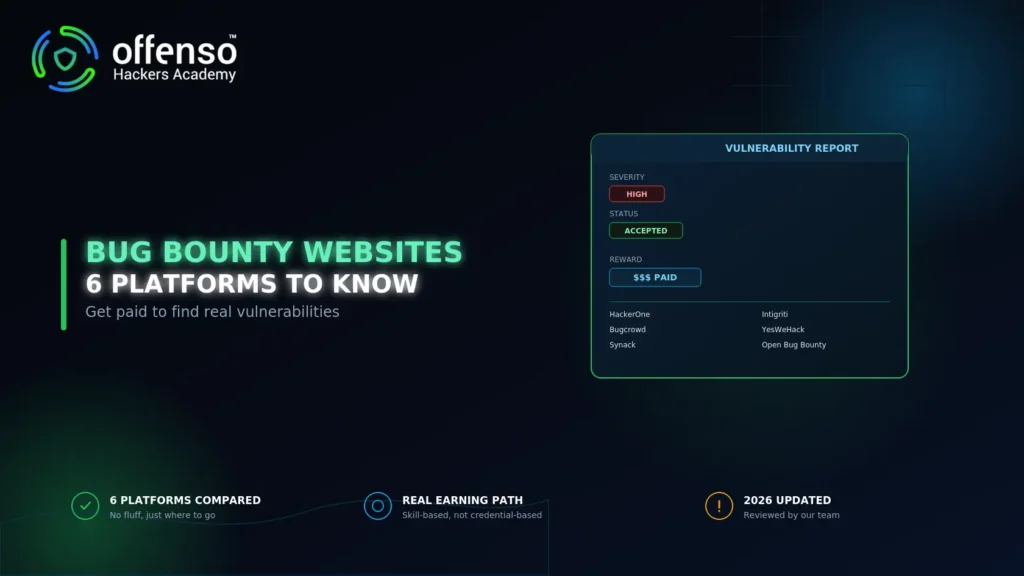
Bug bounty websites connect ethical hackers with real companies willing to pay for legally finding and reporting vulnerabilities in their systems, before someone without permission finds them first. They’re one of the few places in cybersecurity where a beginner with genuine skill can earn real money and build a public track record before ever landing a formal job.
What Bug Bounty Websites Actually Do
A bug bounty website acts as the middle layer between a company that wants its systems tested and a global pool of independent security researchers willing to test them. The company defines scope (what’s fair game to test), sets reward tiers based on severity, and the platform handles report submission, communication, and payout — so a researcher never has to cold-email a company hoping they’ll respond.
This matters because it turns something that used to require an existing industry connection into something anyone with real skill can access directly. A well-written report on a legitimate vulnerability speaks for itself, regardless of whether the person submitting it has a degree, a certification, or any prior professional experience at all.
This is also part of why bug bounty platforms have grown so quickly as a career pathway. Traditional security hiring often filters heavily on formal credentials and prior job titles, which makes it genuinely difficult for a self-taught or newly trained person to get a first foot in the door. A public bug bounty track record — accepted reports, resolved severity levels, consistent activity over time — functions as a different kind of credential entirely, one that’s directly verifiable rather than taken on trust.
6 Bug Bounty Websites Worth Knowing
| Platform | Known For | Good For |
|---|---|---|
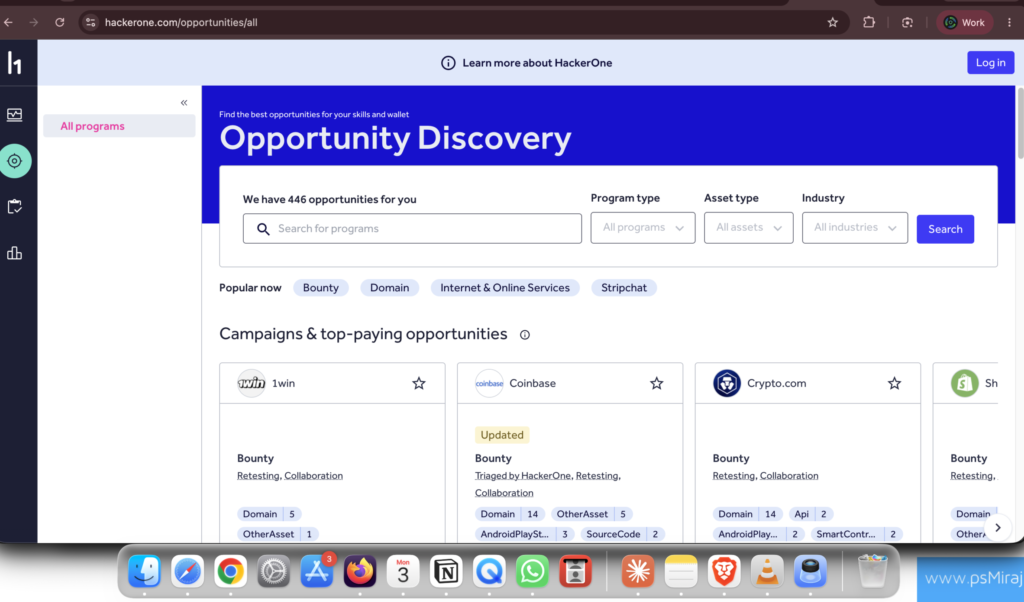
| HackerOne | One of the largest platforms, works with major tech companies | Beginners and experienced researchers alike, huge program variety |
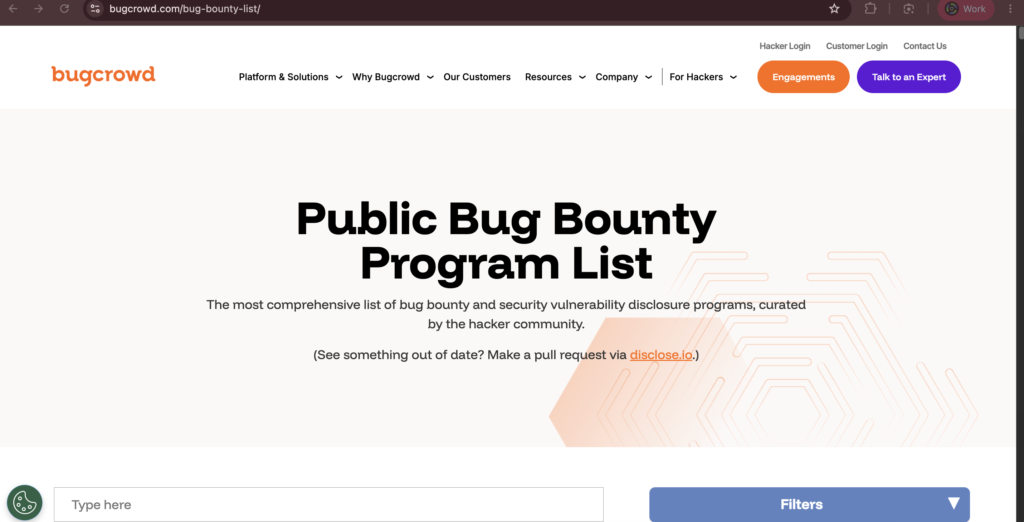
| Bugcrowd | Strong beginner resources and structured programs | Researchers wanting guided onboarding |
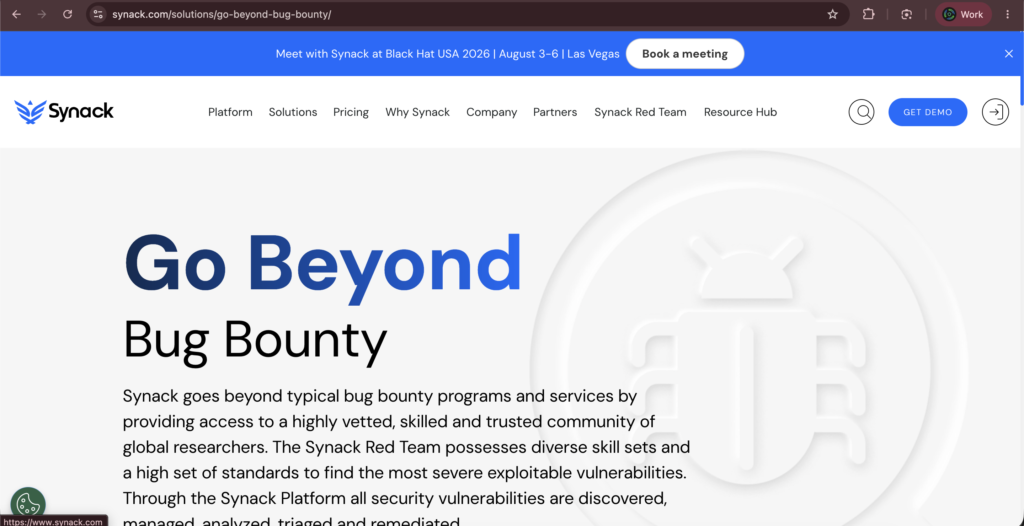
| Synack | Invite-only, vetted researcher network | Experienced testers wanting higher-trust, higher-payout programs |
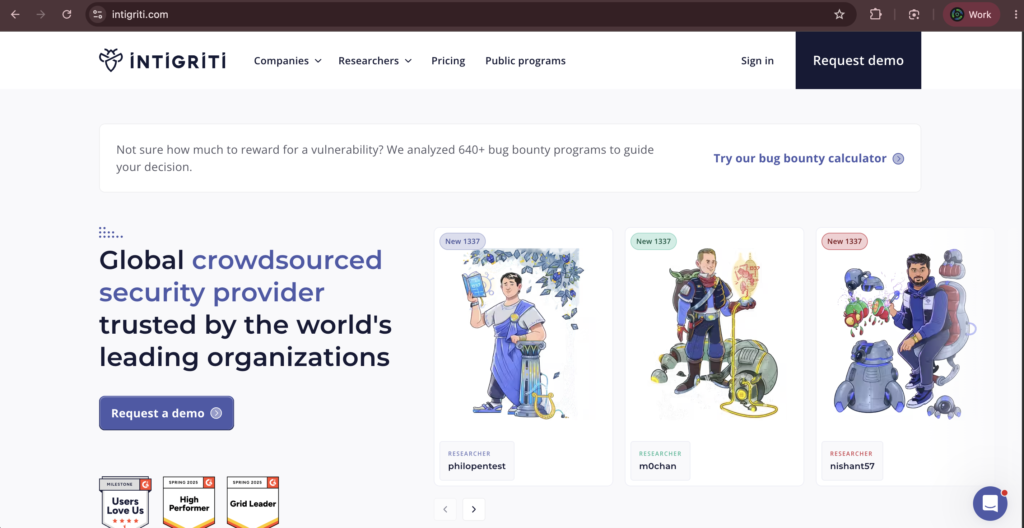
| Intigriti | Popular in Europe, strong community engagement | Researchers wanting active community interaction |
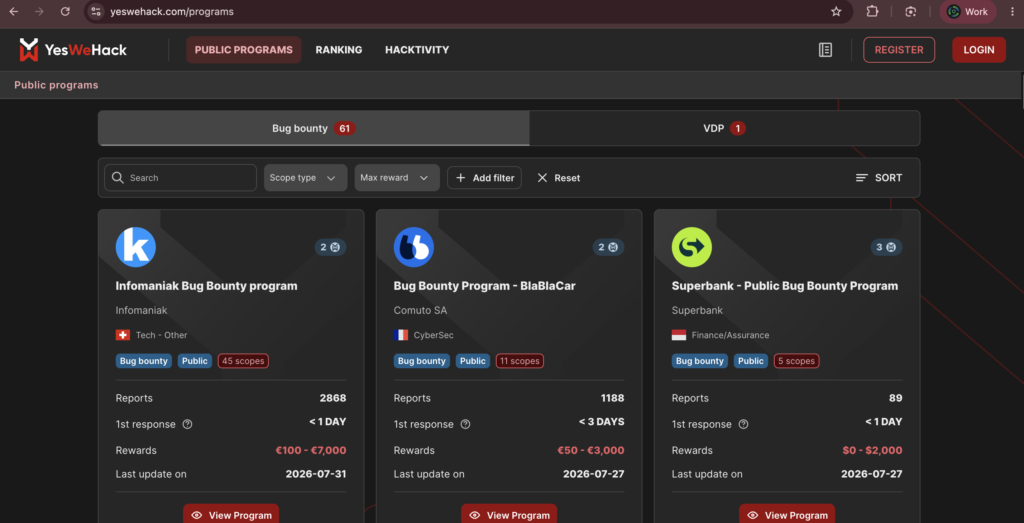
| YesWeHack | Growing platform with programs across multiple regions | Researchers wanting international program variety |
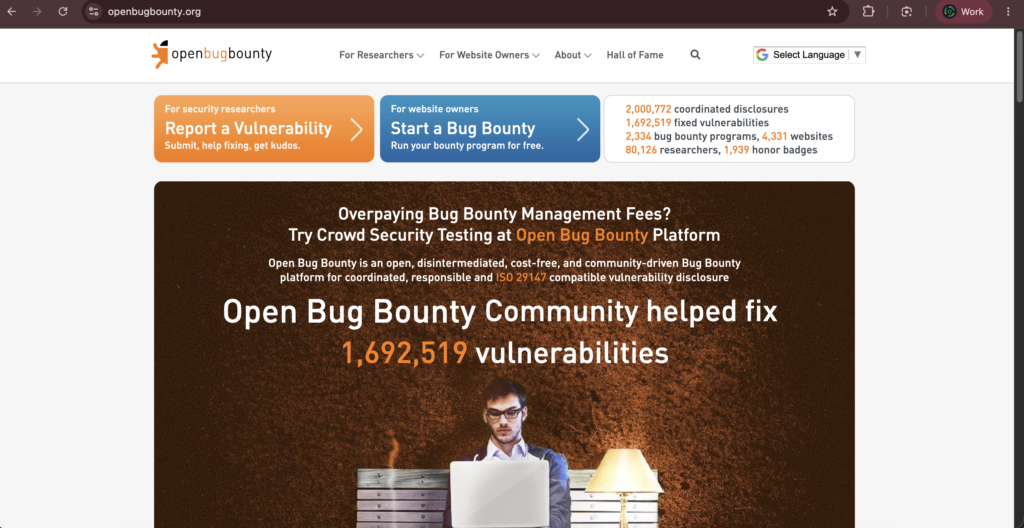
| Open Bug Bounty | Open, disclosure-focused model | Beginners practicing responsible disclosure on public websites |
None of these platforms are competing training providers — they’re where trained skill actually gets tested and monetized, which is a different stage of the journey than learning the fundamentals in the first place.
Show Image Show Image Show Image Show Image Show Image Show Image
How to Actually Get Started on a Bug Bounty Website
- Build fundamentals first. Bug bounty hunting isn’t where you learn networking and web application basics — it’s where you apply them. Jumping in without a foundation usually means submitting low-quality reports that get closed without payment.
- Practice in legal labs before hunting live targets. CTF challenges and dedicated lab platforms let you build real skill without the pressure of a live program’s scope rules.
- Read the program scope carefully before testing anything. Every program defines exactly what’s in bounds and what isn’t — testing outside scope isn’t just against the rules, it can cross into illegal territory. Frameworks like OWASP’s vulnerability disclosure guidance outline the general principles most legitimate programs are built around, which is worth understanding even before joining a specific platform.
- Start with programs that have generous scope and clear documentation. Some programs are far more beginner-friendly than others; the platform’s own guidance usually flags which ones.
- Write clear, reproducible reports. A vulnerability a company’s team can’t reproduce from your report is a vulnerability that won’t get paid, regardless of how real it is.
What Bug Bounty Websites Look For in a Report
- Clear steps to reproduce — vague descriptions get triaged slowly or rejected outright
- Actual impact explained, not just “this is technically a bug” — why does this matter to the business
- Proof, not just a claim — screenshots, a proof-of-concept, or a short video wherever the program allows it
- Respect for scope and rules of engagement — reports on out-of-scope assets are usually closed without payment regardless of severity
- No duplicate submissions — most platforms reward the first valid report of a given issue, so checking existing disclosed reports first (where public) saves wasted effort
Report quality is consistently the deciding factor between researchers who get paid regularly and researchers who don’t, far more than raw technical skill alone. Standards bodies like MITRE’s CVE program illustrate the level of clarity and reproducibility expected when a vulnerability is formally documented — the same discipline applies, at a smaller scale, to a strong bug bounty report.
Common Mistakes Beginners Make on Bug Bounty Websites
- Jumping into live programs before building fundamentals, leading to a string of low-quality, rejected reports
- Ignoring scope documents, then being frustrated when a valid-looking finding gets closed as out-of-scope
- Submitting a finding without a working proof-of-concept, making it easy for triage teams to dismiss
- Getting discouraged by early rejections, when even experienced researchers face a high duplicate/invalid rate on popular targets
- Treating it as a fast income source, when consistent bug bounty income for most researchers takes real accumulated skill and time to reach
Where This Fits Into Building a Cybersecurity Career
Bug bounty platforms are a genuinely useful complement to structured training, not a replacement for it — the fundamentals still have to come from somewhere, and a course that includes real lab time and CTF practice is exactly what prepares someone to actually perform well once they start submitting live reports. Offenso’s Offenso Certified Security Analyst course includes hands-on CTF practice as part of its curriculum, building precisely the skill set that translates into a strong bug bounty track record afterward. For the full foundational path this builds on, see our guide on how to become an ethical hacker.
Think of the relationship this way: structured training builds the mental model needed to recognize a vulnerability in the first place, CTF practice builds the reflexes to find one efficiently under time pressure, and bug bounty platforms are where those two things finally get tested against real, live systems with real stakes. Skipping straight to the third stage without the first two is exactly why so many beginners get discouraged early — not because bug bounty hunting is unreasonably hard, but because they’re missing the groundwork it assumes.
Bug Bounty Websites FAQ
Do I need a certification to use bug bounty websites? No. Bug bounty platforms judge submitted reports on merit, not credentials — though the underlying skill a certification program builds is exactly what produces reports good enough to get accepted and paid.
Can beginners actually make money on bug bounty websites? Yes, though it typically takes time to build the skill needed for consistent results. Many beginners submit several reports before their first accepted, paid finding.
Which bug bounty website is best for beginners? Platforms with strong beginner resources and structured onboarding, like Bugcrowd, or open disclosure-focused platforms like Open Bug Bounty, tend to be more approachable starting points than invite-only networks.
Is bug bounty hunting legal? Yes, as long as testing stays strictly within the scope defined by the specific program — testing outside an authorized scope can cross into illegal territory even on a legitimate bug bounty platform.
How is bug bounty hunting different from a penetration testing job? Penetration testing is typically a formal, scoped engagement with a single client under contract. Bug bounty hunting is usually independent, competitive (multiple researchers testing the same program), and paid per valid finding rather than by time or contract.
Published Date: July 27, 2026